

 See My Latest Article on HelloNation
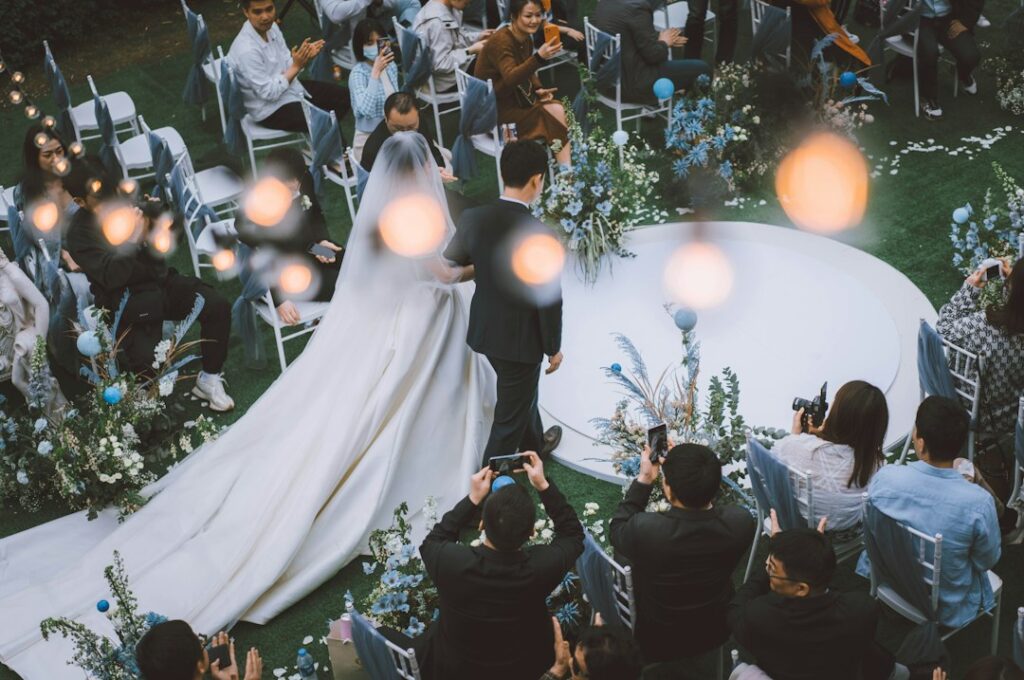
A day-of timeline should answer three questions quickly: what is happening, when it begins, and who needs to be ready. The most useful timeline is not the one with the most detail; it is the one people can understand and follow while moving through a busy wedding day.
For couples planning in Colorado Springs, CO, the schedule should also account for travel time, changing weather, elevation-related fatigue, daylight, and the practical layout of the ceremony and reception spaces.
What should a wedding day timeline include?
A complete timeline lists the day’s major events, the people involved, the location of each activity, and the amount of time needed to move between them.
At a minimum, include:
- Hair and makeup
- Getting dressed
- Detail photos
- First look, if planned
- Wedding party portraits
- Family portraits
- Ceremony setup
- Guest arrival
- Ceremony start and end
- Cocktail hour
- Reception entrance
- Dinner service
- Toasts
- First dance or other formal dances
- Cake cutting or dessert service
- Open dancing
- Final exit
- Cleanup, packing, and transportation
The schedule should also identify transition points. “Photos at 3:00 p.m.” is less useful than “Wedding party leaves getting-ready area at 2:45 p.m. for portraits at the ceremony site.”
When should timeline planning begin?
Start with the ceremony time, reception end time, and any fixed venue rules. Build the rest of the schedule around those anchors.
A practical planning sequence is:
1. Confirm the ceremony start time.
2. Determine how long the ceremony will last.
3. Add guest transition time before the reception begins.
4. Place dinner, speeches, dances, and other reception events.
5. Work backward to determine portrait and preparation times.
6. Add buffer time between major activities.
7. Share the draft with everyone whose responsibilities affect the schedule.
Working backward helps expose rushed sections. For example, if family portraits must finish before a 5:30 p.m. dinner, the timeline must allow enough time for guests to gather, people to locate one another, and the photographer to organize groups.
How much time should be allowed for each part of the day?
The correct amount varies by wedding size, travel distance, group organization, and the number of planned photographs. A timeline should use realistic blocks rather than optimistic estimates.
Common planning ranges include:
- Hair and makeup: several hours, depending on the number of people and services
- Getting dressed: 30 to 60 minutes
- First look: 15 to 30 minutes
- Wedding party portraits: 30 to 45 minutes
- Family portraits: 20 to 40 minutes
- Couple portraits: 30 to 60 minutes
- Guest seating and arrival: 20 to 30 minutes
- Ceremony: 20 to 45 minutes
- Room transition: 15 to 30 minutes
- Toasts: 10 to 20 minutes
- Dinner service: 45 to 90 minutes
These are planning ranges, not rules. A large family group may require more portrait time, while a small ceremony with no formal photographs may need much less.
Avoid filling every minute. A timeline that leaves no room for delays will usually fall behind early and remain behind for the rest of the day.
What is a useful amount of buffer time?
Most wedding schedules benefit from short buffers throughout the day rather than one large delay at the end. Add approximately 10 to 15 minutes between major events when possible.
Useful buffer points include:
- After hair and makeup
- Before leaving the getting-ready location
- Before the ceremony begins
- Between the ceremony and portraits
- Before the reception entrance
- Before dinner and formalities
A buffer is not wasted time. It allows for misplaced personal items, slow elevators, unexpected conversations, restroom breaks, weather changes, or guests who need extra assistance.
The final hour before the ceremony deserves special protection. Avoid scheduling too many errands, photographs, or outfit changes during this period.
How should travel and venue layout affect the schedule?
Travel time should be measured door to door, not estimated from a map alone. Include time for loading vehicles, walking from parking areas, gathering people, and finding the correct room or outdoor area.
A timeline should distinguish between:
- Leaving one location
- Arriving at the next location
- Being ready to begin
For example, a 15-minute drive does not necessarily equal a 15-minute transition. The actual block may need to include five minutes for gathering, 15 minutes of travel, and another 10 minutes for unloading and organizing.
Large properties, split-level buildings, outdoor ceremony areas, and venues with separate preparation rooms can all add movement time. Walk through the route in advance and identify where wedding party members, elderly relatives, children, and vendors may need additional assistance.
What local weather factors matter in Colorado Springs?
Outdoor timelines in Colorado Springs should include a weather backup plan, especially during seasons with sudden temperature changes, wind, rain, snow, or intense sun.
Plan for:
- Shade or indoor space during midday heat and bright sun
- Extra time for securing décor in windy conditions
- A warm holding area during cool mornings or evenings
- Covered routes between buildings
- Safe footwear for uneven or damp ground
- Protection for paper goods, flowers, electronics, and clothing
- Earlier sunset conditions during shorter winter days
Weather does not always require canceling an outdoor plan. It may require moving portraits, adjusting the ceremony location, shortening outdoor exposure, or changing the order of events.
The timeline should state who makes weather-related decisions and when the backup plan will be activated. Unclear responsibility can create delays during an already compressed schedule.
Who needs a copy of the timeline?

Not everyone needs the same level of detail. Create one master version and shorter versions for different groups.
The master timeline should include exact times, locations, responsibilities, contact information, transportation details, setup tasks, and contingency plans.
A wedding party version may only need:
- Arrival time
- Getting-ready location
- Portrait times
- Ceremony start time
- Reception entrance time
- Transportation instructions
- Important personal responsibilities
Parents, speakers, readers, musicians, and anyone participating in formal events should receive the specific information that applies to them. Sharing the schedule several days in advance gives people time to ask questions while changes are still manageable.
How can the timeline stay easy to follow?
Use plain language, consistent time formatting, and short descriptions. Avoid long paragraphs inside the schedule.
A clear timeline entry might read:
2:30 p.m. — Family portraits
Immediate family gathers near the ceremony area. Portrait list begins with both parents, then adds siblings and grandparents.
Useful formatting practices include:
- Use either 12-hour or 24-hour time consistently.
- Separate preparation, ceremony, portraits, reception, and departure.
- Highlight events that require everyone to be present.
- Identify the person responsible for each transition.
- Write locations exactly as guests will recognize them.
- Mark flexible events as flexible and fixed events as fixed.
- Keep a printed copy available in case phones lose battery or service.
One person should act as the timeline point of contact so the couple is not repeatedly interrupted with logistical questions. That role may be filled by a trusted family member, member of the wedding party, or another designated person.
What common timeline mistakes should be avoided?
The most common mistake is scheduling based on ideal conditions instead of real conditions. A timeline may look efficient on paper but fail once people need to change clothes, travel, locate relatives, or wait for weather to improve.
Other frequent problems include:
- Starting portraits before the required people have arrived
- Forgetting setup and cleanup time
- Scheduling too many formal events during dinner
- Allowing no time for restroom breaks or meals
- Placing speeches before speakers know where to stand
- Assuming guests will move immediately after the ceremony
- Scheduling an outdoor activity after sunset
- Treating transportation as a single departure time
- Giving people a timeline without explaining their responsibilities
A strong schedule is flexible enough to absorb small delays without affecting the ceremony or the most meaningful parts of the reception. It should help people make decisions quickly, not create another source of confusion.
What is the simplest way to test the timeline?
Read the schedule from the perspective of each major participant. Ask where that person is, what they need, and how they get to the next location.
Test the timeline for:
- The couple
- The wedding party
- Parents and immediate family
- Guests with mobility concerns
- Speakers and ceremony participants
- Transportation drivers
- Setup and cleanup helpers
If any person must be in two places at the same time, the schedule needs revision. If a transition depends on one person remembering several tasks, write those tasks directly into the timeline.
The final version should be short enough to scan quickly, detailed enough to prevent guesswork, and flexible enough to handle ordinary wedding-day interruptions.